Aug 2, 2026News & Insights
Private Label Bond Repair Shampoo, Mask and Treatment
Learn how to build a private label bond-repair system connecting professional salon services with shampoo, conditioner, masks and leave-in maintenance.
Salon-to-Home Bond Repair: How Private Label Brands Can Build a Credible Damage-Care System
Bond-repair hair care is no longer limited to one pre-shampoo treatment.
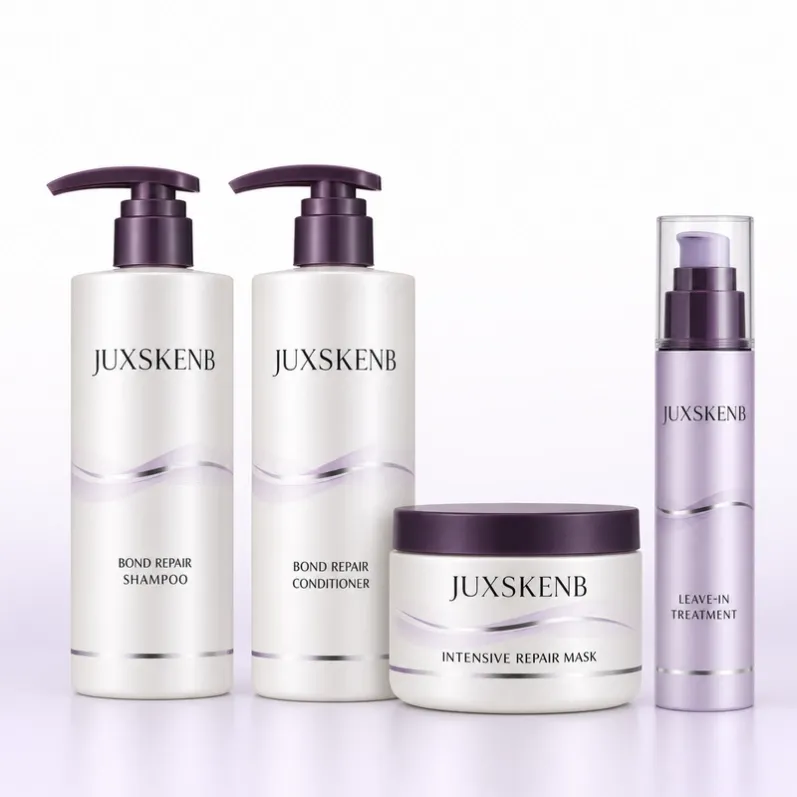
Professional brands are increasingly building complete systems that begin with a salon service and continue through shampoo, conditioner, masks and leave-in products at home.
In July 2026, professional brand milk_shake introduced its Everlasting Bonds collection across salon and consumer channels. The range includes a salon-exclusive pre-shampoo step, shampoo, conditioner, mask and leave-in treatment. This is a brand-reported launch, not independent market-size evidence, but it demonstrates how bond repair is being converted into a multi-SKU commercial routine. Read the July 2026 product launch.
A July 2026 search-and-social trend analysis also identified “hair repair treatment” and “hair moisturizing mask” as growing search themes. The data comes from a third-party platform rather than a direct Google Trends export, so the numerical estimates should be treated as directional. View the current hair-care trend analysis.
TikTok’s Creative Center connects
#hairrepair with related topics including #damagedhair, #splitends, #hairmask and #shinyhair. Activity changes by market and time period, but this observed grouping confirms that damage-care education and visible results are closely connected in short-form content. View TikTok’s current hair-repair trend page.The opportunity for an OEM/ODM buyer is not simply putting “bond repair” on every label. The stronger opportunity is building a clear system for a defined type of damaged hair.
What Type of Damage Is the Product Addressing?
The product brief should identify the main customer:
- Bleached or highlighted hair
- Permanently colored hair
- Relaxed or chemically straightened hair
- Frequently heat-styled hair
- Permed hair
- Dry, rough or porous-feeling lengths
- Hair experiencing mechanical breakage
- Salon clients maintaining a chemical service
These conditions are not identical. A rich mask designed for heavily bleached hair may overwhelm fine, moderately damaged hair.
Recommended Five-Step System
1. Professional Pre-Service Treatment
This step can be designed for salon application before or during a chemical service, depending on the final formula and professional directions.
It may focus on preparing the hair, improving manageability or supporting a coordinated service routine. It should not be added directly to bleach or color unless compatibility and directions have been specifically established.
2. Damage-Care Shampoo
The shampoo should cleanse without making processed hair feel excessively rough.
Development goals may include:
- Controlled cleansing
- Creamy lather
- Easy rinsing
- Reduced tangled after-feel
- Compatibility with color-treated hair, where evaluated
- Suitable fragrance for a professional range
- Retail and backbar packaging
3. Lightweight Repair Conditioner
The conditioner can serve frequent use and provide faster rinsing than the mask.
Its role is:
- Wet detangling
- Softness
- Improved manageability
- Reduced heavy residue
- Support for daily or regular maintenance
4. Intensive Bond-Care Mask
The mask should be the richer weekly product.
Development priorities may include:
- Dense but spreadable texture
- Strong wet slip
- Manageable rinse time
- Softer dry feel
- Suitability for bleached or highly processed lengths
- Clear recommended application time
5. Leave-In Protection Treatment
A leave-in product completes the consumer routine and can be used before styling.
Possible positioning includes smoothing, manageability, reduced rough feel and cosmetic protection. Heat-protection temperatures or breakage-reduction percentages require suitable finished-product evidence.
Bond Repair Is a Claim, Not an Ingredient Trend
A formula containing amino acids, protein, citric acid or conditioning polymers is not automatically a proven bond-repair product.
The brand should distinguish among:
- Conditioning
- Surface smoothing
- Protein-based strengthening
- Reduced combing damage
- Improved tensile properties
- Internal bond-related performance
These may overlap, but they are not interchangeable.
If the project does not include the evidence needed for a specific bond-repair claim, responsible alternatives include:
- Damage-care system
- Strengthening hair treatment
- Care for bleached and processed hair
- Helps improve manageability
- Helps reduce the appearance of rough, damaged lengths
- Supports softer, smoother-looking hair
Salon and Retail Sizes
A practical architecture could include:
- 1,000 ml professional shampoo
- 1,000 ml professional conditioner
- 300 ml retail shampoo
- 250–300 ml conditioner
- 200–300 ml treatment mask
- 100–150 ml leave-in treatment
- Single-use salon treatment ampoule, subject to feasibility
- Retail maintenance kit
The professional and retail products should share a visual identity but remain easy to distinguish during salon work.
Sampling and Evaluation
Evaluate the system on hair representative of its target condition:
- Virgin versus bleached hair
- Fine versus thick hair
- Straight versus curly texture
- Moderate versus severe cosmetic damage
- One application versus repeated use
- Shampoo alone versus complete system
- Air-drying versus heat styling
A formula may make wet hair feel excellent while leaving dry hair flat or coated. Both stages matter.
Marketing Recommendations
Salons can use the professional treatment as a service upgrade and retail the home-maintenance range afterward.
Amazon sellers should explain the order of use clearly rather than listing five products with overlapping promises.
Distributors can start with shampoo, mask and leave-in treatment, then add professional sizes after salon demand is established.
TikTok sellers can demonstrate wet-combing, elasticity appearance, blow-drying and surface smoothness. Avoid deliberately snapping untreated hair to exaggerate breakage.
Color brands can position the system as aftercare for bleaching and coloring customers, subject to formula suitability.
Claims to Avoid Without Evidence
Do not automatically claim that the system:
- Rebuilds every broken bond
- Permanently reverses chemical damage
- Repairs split ends permanently
- Eliminates all breakage
- Makes hair a stated percentage stronger
- Protects against a specified temperature
- Produces salon results for every user
- Restores severely damaged hair to a virgin condition
FAQ
Is bond-repair treatment the same as a hair mask?
Not always. A mask describes format and usage, while bond repair is a specific performance position that requires an appropriate formula and support.
Can a bond product be mixed into bleach?
Only when the final product has been specifically designed and evaluated for that use.
Should a new brand launch all five products?
No. Shampoo, mask and leave-in treatment create a commercially understandable starter system.
Is protein the same as bond repair?
No. Protein-related conditioning or strengthening and bond-related performance are not automatically equivalent.
Develop a Professional Damage-Care System
Guangzhou Junchun Cosmetics supports shampoo, conditioner, mask, leave-in and professional treatment OEM/ODM projects across 28 production lines.
Selected market-ready formulas with compatible stock packaging may start from 100 pieces per SKU. Custom performance requirements, professional-use formulas, ampoule packaging and substantiated technical claims can require different project quantities.
Production timing is confirmed after the formula, packaging, artwork, testing requirements and order details are approved. Send us the target damage type, salon or retail channel, required SKUs and target price for evaluation.