Jul 28, 2026News & Insights
Private Label Anti-Humidity Hair Spray for Glass Hair
Explore the private label opportunity behind heat-activated anti-humidity sprays, glass-hair finishes and lightweight frizz-control styling products.
Heat-Activated Anti-Humidity Hair Spray: A Private Label Opportunity for the Glass-Hair Market
Smooth, reflective “glass hair” remains a highly marketable beauty result because consumers can see the transformation immediately. Instead of selling only an ingredient story, brands can demonstrate the difference between untreated, frizzy hair and hair that appears smoother, shinier and more polished after blow-drying.
A July 27, 2026 review by the New York Post focused on Color Wow Dream Coat’s heat-activated, anti-frizz and humidity-resistant positioning. The reviewer emphasized the lightweight finish and visible smoothing effect rather than heavy oil-based conditioning. This is one current example—not proof of the performance of every similar product—but it shows how the anti-humidity spray format is being communicated to consumers. Read the July 27 review.
Third-party Amazon analytics pages also continue to track strong competition across hair serums, gloss treatments and anti-frizz products. Their figures are estimates rather than official Amazon sales data, but the assortment confirms that shine, smoothing and frizz-control benefits are active commercial positions. View the third-party hair serum category analysis.
Why This Format Is Commercially Attractive
Traditional hair oils can provide shine and improve the feel of dry ends, but some consumers worry that oils will make fine hair look greasy or reduce volume. A fine spray applied before blow-drying offers a different product experience.
The most promising positioning is not simply “another hair serum.” It is a lightweight styling treatment designed around a clear routine:
- Apply to clean, damp hair.
- Distribute section by section.
- Blow-dry with tension.
- Reveal a smoother, glossier finish.
This routine is easy to explain through short videos, salon demonstrations, product-page graphics and before-and-after photography. That makes the format relevant for TikTok sellers, Amazon brands, salons and distributors serving humid markets.
The commercial inference is that brands can compete through application experience and finish—not only through a long ingredient list.
Recommended Private Label Product Concept
A strong initial concept would be a Heat-Activated Anti-Humidity Gloss Spray with the following development objectives:
- Fine, even mist
- Lightweight, non-oily after-feel
- Easier blow-dry styling
- Smoother-looking hair surface
- Increased visible shine
- Reduced appearance of flyaways
- Suitable for frequent styling routines
- Compatible with straight, wavy or treated hair
Any statements about heat protection, duration, humidity resistance or measurable frizz reduction should be supported by appropriate product testing. Brands should avoid automatically printing claims such as “72-hour protection” or “waterproof hair” without evidence.
Build a System Instead of One Isolated SKU
A single hero spray can attract attention, but a coordinated routine can increase repeat purchasing and average order value.
A practical three-product collection could include:
- Smoothing Shampoo: Cleanses without leaving an excessively stripped feel.
- Lightweight Smoothing Conditioner: Supports detangling and softness without a heavy coating.
- Heat-Activated Gloss Spray: Provides the visually demonstrable finishing step.
An optional fourth product could be a small anti-frizz serum for dry-hair touch-ups. This separates pre-blow-dry use from daily finishing use and gives customers a clearer reason to purchase both products.
For Amazon or direct-to-consumer launches, the gloss spray should remain the hero SKU. The shampoo and conditioner can then be introduced as a bundle or follow-up launch.
Packaging and Content Recommendations
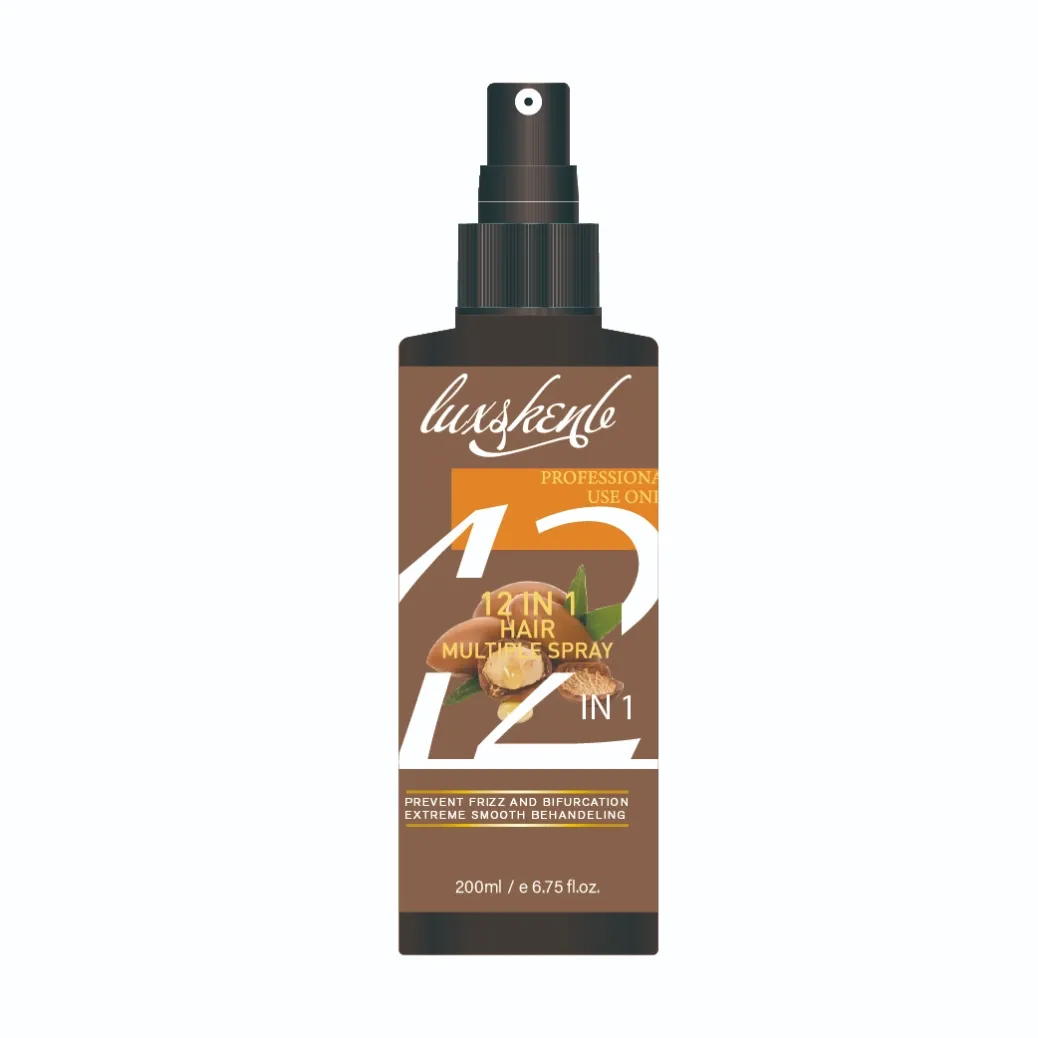
A spray bottle between approximately 100 and 200 ml is practical for this category. The pump must create consistent coverage without producing a heavy stream. Compatibility between the formula, bottle and spray mechanism should be checked before production.
Packaging communication should be simple. The front panel could focus on three understandable benefits:
- Smooth
- Shine
- Humidity Control
The back panel should clearly explain that heat activation requires blow-drying if that is how the formula is designed to perform.
For short-form video, brands can demonstrate the product on one side of the model’s hair while leaving the other side untreated. Lighting and hair preparation must remain consistent so the comparison is credible.
Channel-Specific Recommendations
For Amazon sellers: Use application graphics, hair-type guidance and clear before-and-after visual standards. Avoid filling the title with unsupported performance claims.
For salons: Offer professional-size back-bar packaging and a smaller retail bottle. Stylists can introduce the product during blow-dry services.
For humid-climate distributors: Emphasize daily manageability, lightweight feel and the difference between an anti-humidity spray and a conventional hair oil.
For TikTok and social-commerce sellers: Lead with the transformation, but provide complete instructions. A dramatic visual without correct usage guidance may create unrealistic expectations.
Questions to Give Your OEM/ODM Manufacturer
Before confirming development, ask:
- Is the formula intended for heat activation or air-drying?
- Which hair types were considered during sample evaluation?
- Does the formula leave residue after repeated use?
- Is the spray pump compatible with the formula?
- Which proposed claims require additional testing?
- Can the fragrance level be adjusted?
- Is the product suitable for color-treated hair based on the final formulation?
- What stability and packaging-compatibility work is recommended?
These questions help convert a trend idea into a realistic product brief.
FAQ
Is an anti-humidity spray the same as hair oil?
No. Hair oils are normally used to condition, soften or finish the hair. An anti-humidity styling spray may be designed for damp hair and activated during blow-drying.
Can the product claim heat protection?
Only when the final formula and claim have appropriate supporting evidence. Heat protection should not be assumed from the product format.
Should a new brand launch the complete routine immediately?
Not necessarily. A hero spray can test market demand first. Shampoo, conditioner and serum can be added after the brand understands customer feedback.
Can selected products start with a small order?
Guangzhou Junchun Cosmetics offers selected market-ready formulas and stock-packaging options that may start from 100 pieces per SKU. Availability depends on the formula, packaging and project requirements.
Develop Your Anti-Humidity Hair Care Line
Guangzhou Junchun Cosmetics Co., Ltd. supports hair care OEM/ODM projects across 28 production lines. We can help evaluate formula direction, packaging format, fragrance, positioning and the supporting shampoo or conditioner system.
Lead time and final minimum order quantity depend on the approved formula, packaging and order details. Contact our team with your target market, expected retail price, hair type and preferred product format to request a project assessment.